
Scope of Project: Credentialing Coordinators are responsible for collecting required documents, verifying education, credentials, and licenses, and researching issues associated with applications from physicians and advanced practice practitioners to the medical staff for hospital privileges or affiliation. The coordinator is responsible for fully prepping the file for review by the Chief of the specialty department. Files are expected to be 100% in compliance, in accordance with Joint Commission Standards and Hospital Bylaws, at the time they are routed forward for review. Anything less could be considered negligent Credentialing and creates risks for the healthcare organization, including loss of accreditation and ultimately risks for patients.
Problem: A coordinator has been deemed responsible for QA her own files, bypassing the QA supervisor’s review. The current coordinators process their files utilizing a printed form template to keep track of actionable areas in the file. Because the form is intended to be a guide only, highlighting main objectives and condensing them to one page, every detail, standard and specific, to a file is not clearly indicated as pending action or more research on the template. The form is degraded by handwritten comments equivalent to sticky notes. The use of the form does not prevent errors in each file.
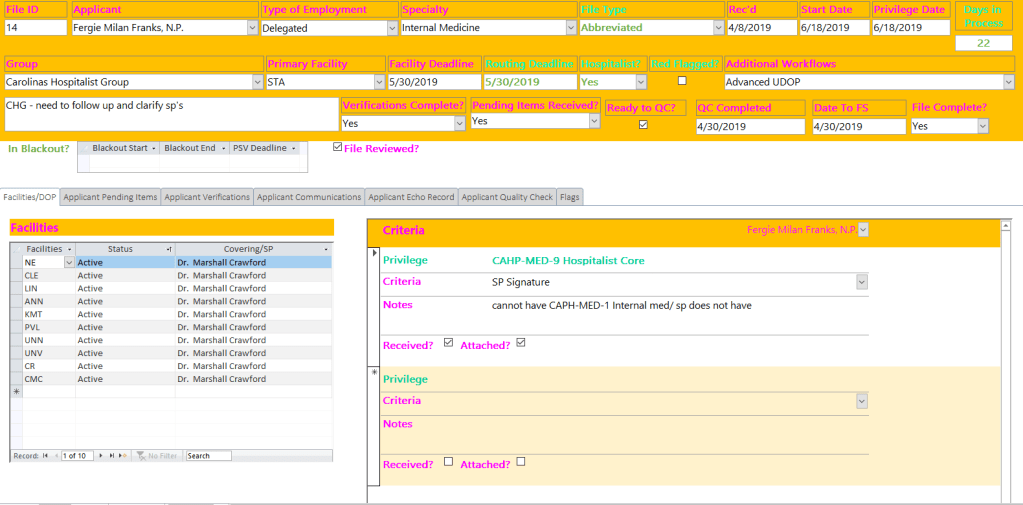
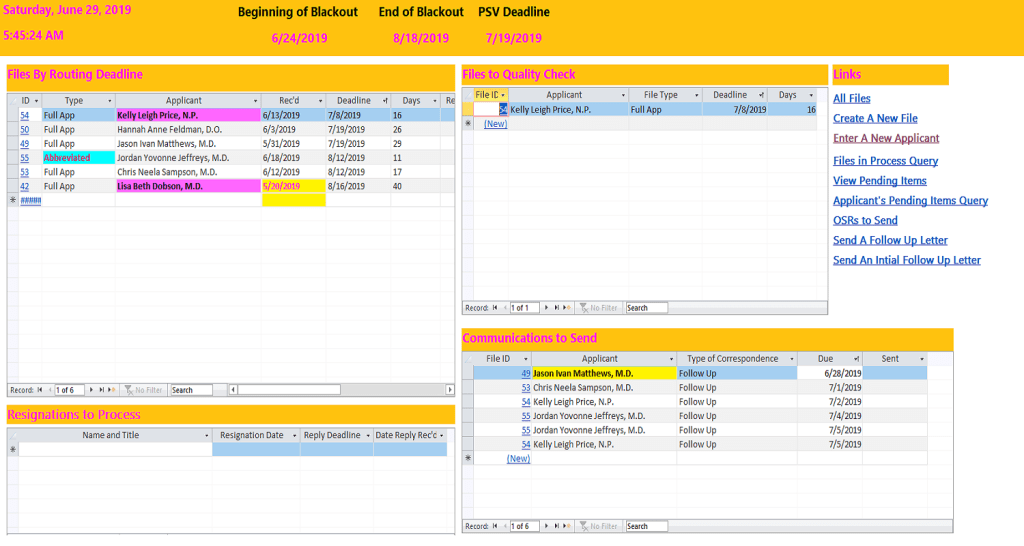
Solution: The sample Credentialing Coordinator database efficiently documents and tracks the life cycle of applications to the medical staff. It significantly improves the accuracy and efficiency of a coordinator. Required and additional documentation and verifications for each file are not left up to memory or even reviewing notes. Depending on the type of employment and practitioner, the usual pending documents and verifications can be auto-added to a file/record to track. Only verifications and pending items specific to a file have to be manually entered from a drop-down list. Issues and privilege criteria can also be tracked in the database. The drop-down lists in the application are populated with information from the applicable organization such as NAMSS and the ABMS. Even required followups can be scheduled in the tool, and there is ample space for organized, typed, notes. I also automated the follow-up communication which pulls the current pending items (eliminating the need to do extensive file review prior to follow-up) and deadlines. The Quality Check helps the coordinator be more confident and the accountable professional for 100% review of their files. This eliminates the need to dedicate the supervisory resource to one team and would allow that individual to only QA the riskiest files or those that meet some other criterion. Additionally, the QA supervisor would be capable of ensuring the compliance of files for all teams within the department. Lastly, the intelligent dashboard keeps the coordinator on task and in front of deadlines at all times.

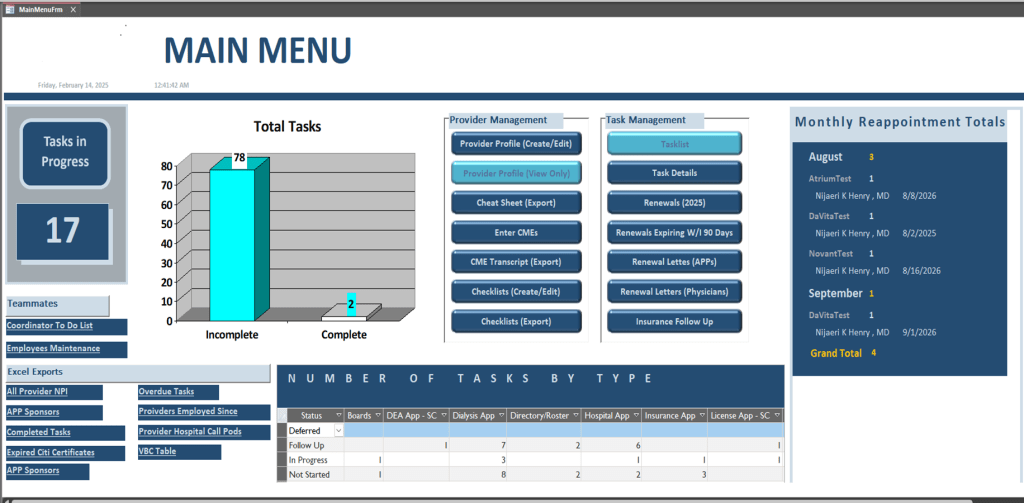
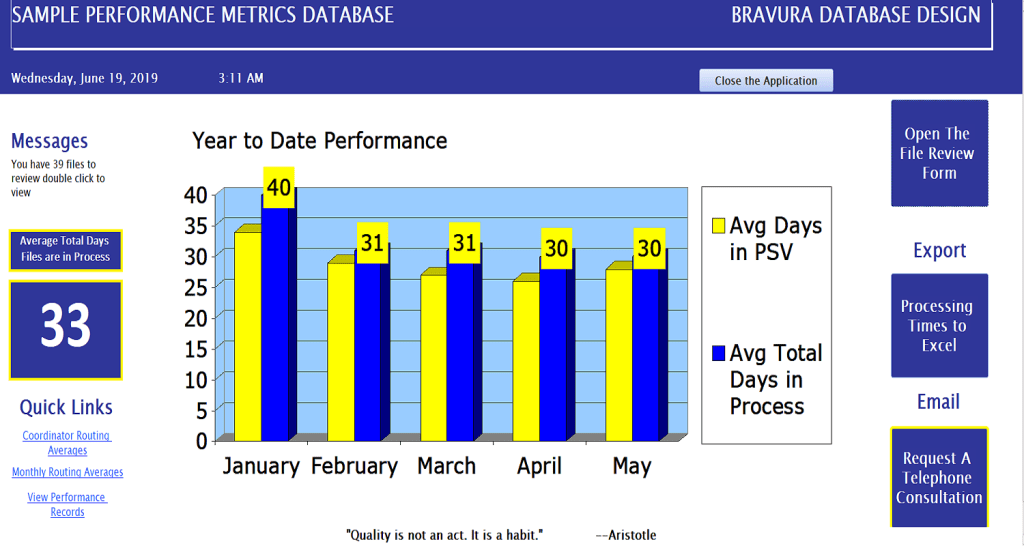
This innovative database for PSV is a game changer. It efficiently manages each file from start to finish, seamlessly facilitating handoff. With proactive reminders about the number of files in progress and their duration, coordinators stay alert, reducing the risk of missed deadlines. This DB intelligently adds the necessary credentials for verification tailored to each provider type and other specifics. Plus, it includes a valuable feature—a DOP tool! With the ability to monitor your DOP criteria and flag critical documentation, this database boosts efficiency and shortens processing times.



 K Henry Credentialing Consultant & Microsoft Access Database Developer